Microfactories
Regional and Remote Development
In Place On Demand Manufacturing
Sovereign Manufacturing.
Local circular assets, owned by the people, designed for resilience.
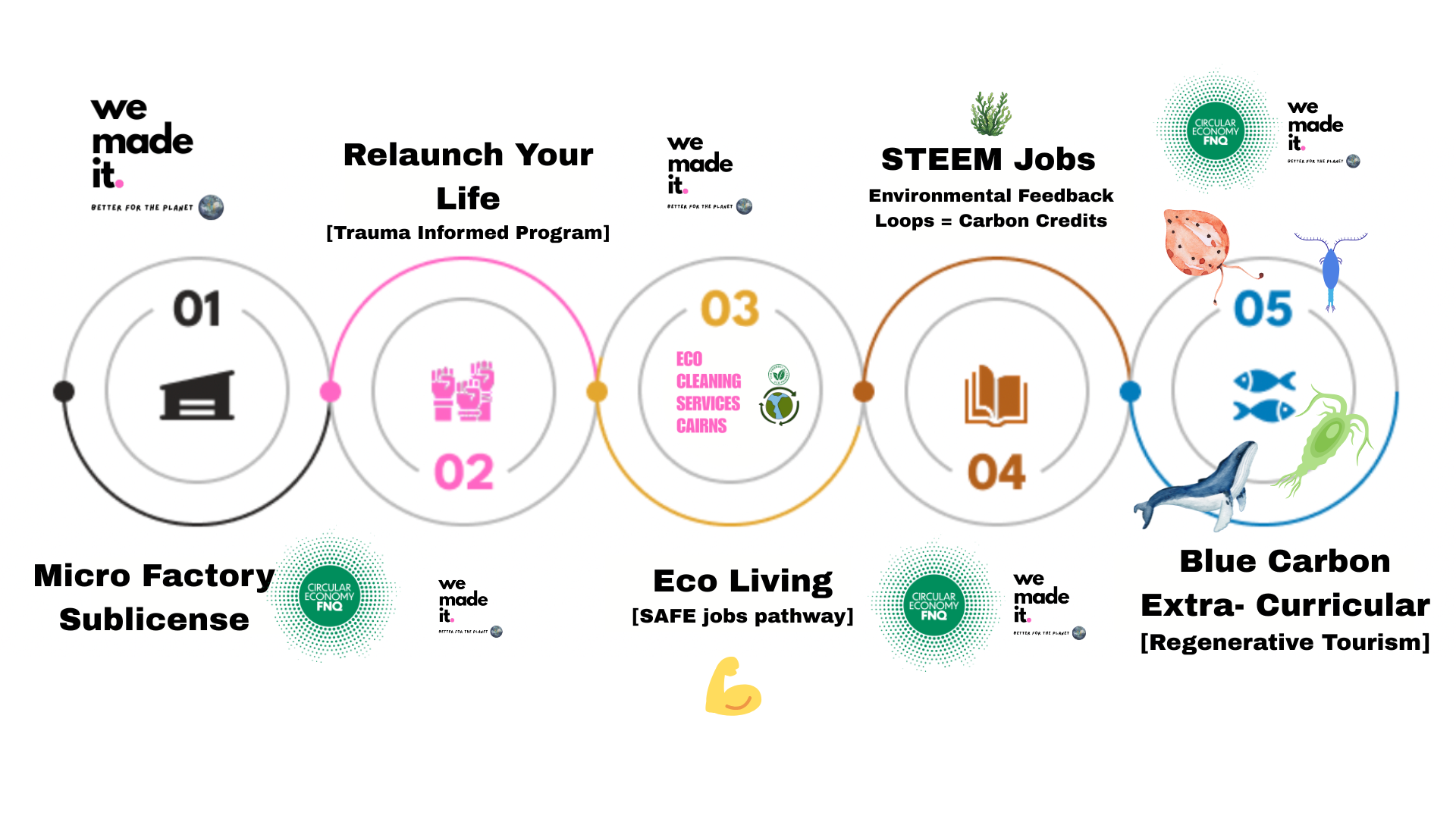
Circular Economy FNQ is piloting a new model for regional Australia:
community-owned micro-factory infrastructure operated as a local microgrid, embedded inside the footprint of small LGAs that want to become environmental-first communities.
Instead of centralised, privatised waste systems that send materials all the way to Brisbane — we are building small, compliant, localised waste-to-energy nodes.
These nodes allow us to deliver a system that:
- sit within EPA and ERA regulations
- operate as microgrid waste-management systems
- remain owned by the community through a co-op
- create local jobs and local manufacturing
- strengthen cost-of-living resilience
- can be replicated across multiple locations in the same town
This pilot becomes the prototype for how Australian towns can maintain economic stability while transitioning to circular systems.
And delivers Product Stewardship Certification Policy, for 90% of the Ministers List but we're really focusing on just 2, so that that Policy can be transitioned to compulsory in FNQ considering freight has an extra tax considering the state of our roads above Mackay.
This End Of Life producer pays Policy is one of the 3 policies we need that will move the needle in Climate Change. When we shift the responsibility of the end of life of a product to the manufacturer then it makes it better for them and their clients.
Creating drop off points for Containers For Change Change type of return policy but instead of money you get the option to buy the outputs at a member price. That's how Co-ops work, you get community buying power.
This is how you improve systems, with quality feedback loops and that is what this policy does.
Along with the 2018 Slavery Act getting it's first commissioner this year which means less cheap imports are on the horizon.
ESG, ISO59000 and Environmental Science Data
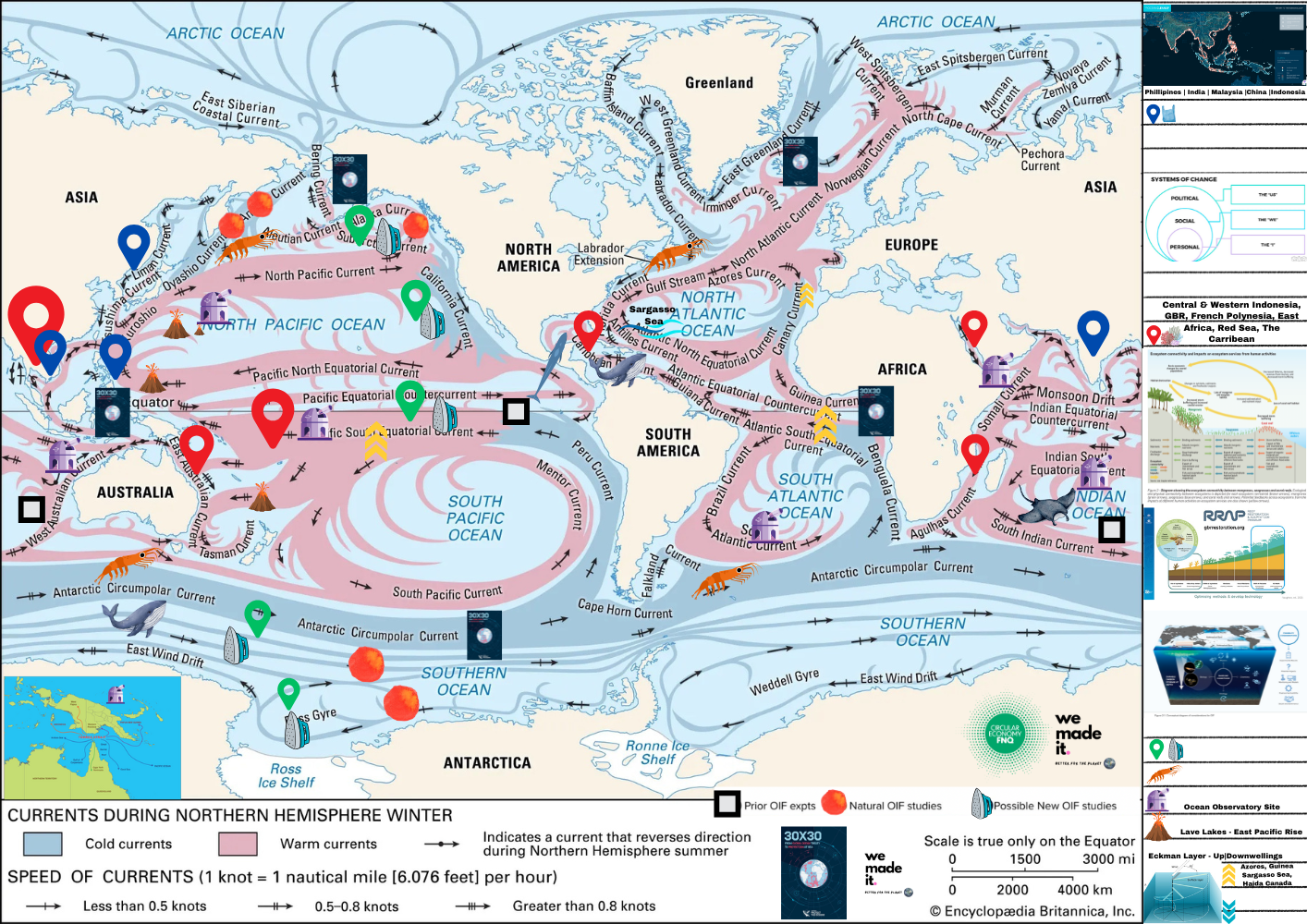
The Ocean Study being faciliated by exOIS is keen to make sure they set an example for mCDR to follow while establishing Ocean Observatories for Marine Clouding, CO2 drawdown and potentially Ocean Treaty 2030. There is no African or Australian research labs in their Research so adding that is also a key part of what we are doing.
If we are in the Southern Hemisphere it makes sense to have Ocean Observatory especially if we have some of the largest Super Trawlers with full manufacturing out at Sea that only requires to market freight collection and refueling. That is our lane and Krill is Tasmania's Aboriginal peoples Totem so there is grounds for 2-3 Australian STEEM centres to join this study.